
Project Background
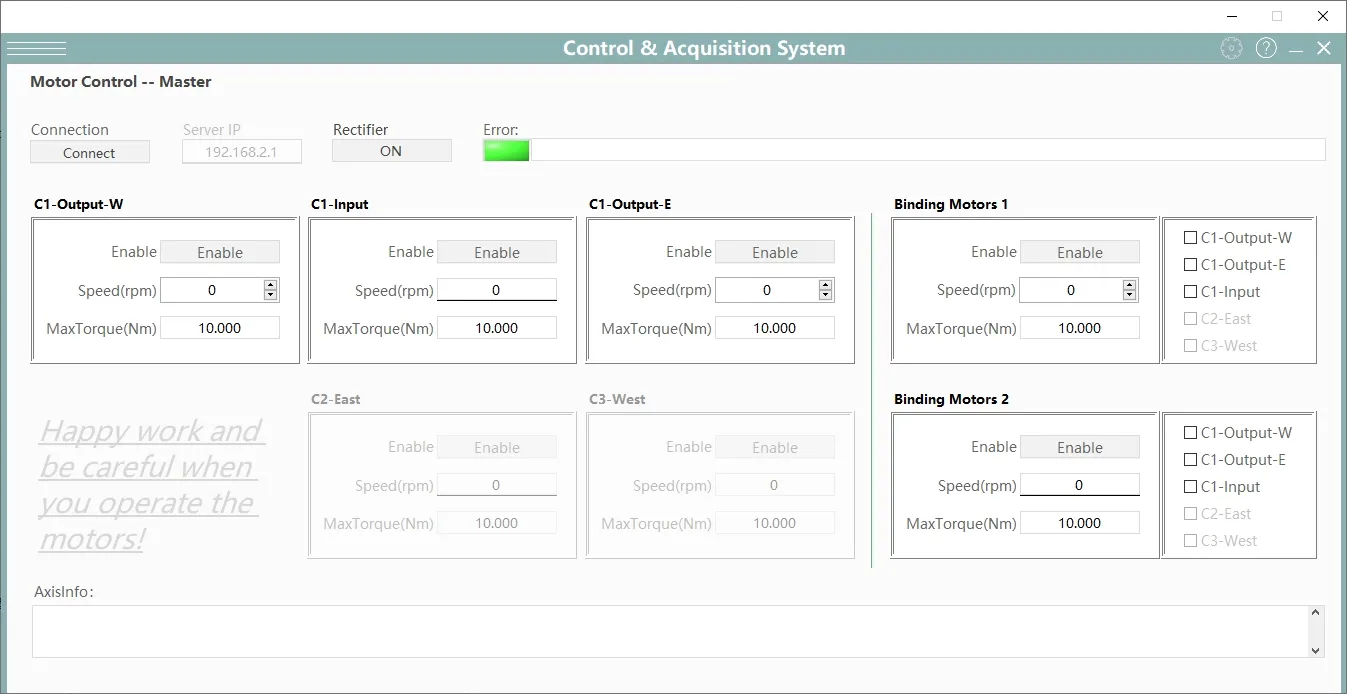
To meet a vehicle manufacturer's requirements for performance and durability verification testing of a localized powertrain (engine + transmission), this project developed an integrated, high-accuracy test platform. Through independently developed software, it precisely simulates powertrain operating conditions, regulates dynamic load, acquires multi-dimensional data, and provides intelligent interactive control, covering complex test scenarios such as park, shifting, cold start, and extreme conditions.
System Composition
Hardware Architecture:
Power Unit:2.0T engine (input power) + two 200 kW Siemens servo motors (simulated load output)
Cooling System:Independent oil-cooling/water-cooling circulation tanks, with closed-loop temperature control
Data Acquisition:NI cDAQ high-speed data-acquisition cards, integrating sensors for vibration, oil temperature, oil pressure, torque, speed, and others
Communication Interface:Real-time communication with the ECU and TCU over CAN/LIN
Software Core:
Independently developed test-control software
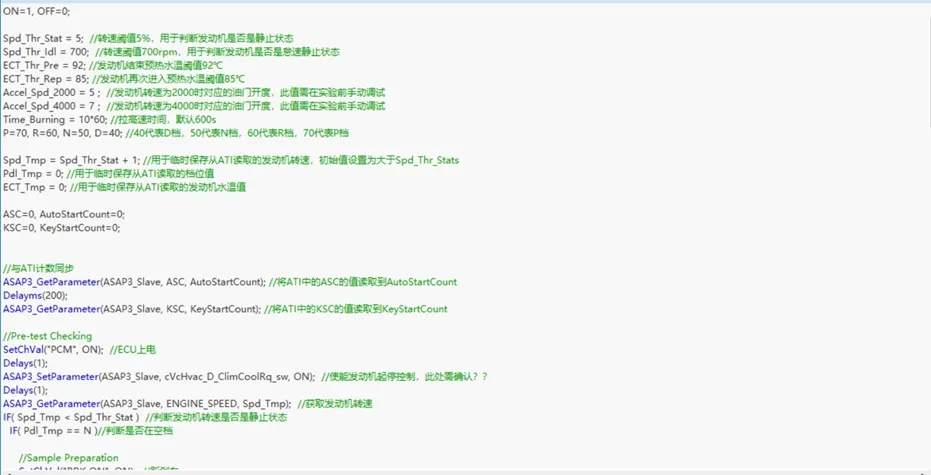
Programmable script-language engine (supports dynamic operating-condition editing)
Data visualization and fault-diagnosis module
Software Function Highlights
1. Multi-Device Coordinated Control
Dynamic Powertrain Matching:
PID control synchronizes engine speed and servo-motor torque, dynamically balancing input and output power.
Supports simulation of engine cold-start conditions (ambient-temperature compensation from -30°C to 50°C).
Intelligent Cooling-System Regulation:
From real-time oil-temperature and water-temperature feedback, the system switches between oil cooling and water cooling automatically and keeps the system thermally stable.
Abnormally high temperature triggers staged load reduction to prevent equipment overload.
2. Scripted Testing Across Operating Conditions
Independently Developed Scripting Language:
Supports programming logic such as sequence control, conditional jumps, and nested loops, so complex test sequences can be written.
Typical Test Scenarios:
Park Test:Simulates flywheel vibration characteristics during engine start-stop.
Shift Test:Controls upshifts and downshifts through interaction with the TCU, and dynamically adjusts servo-motor load torque (for example, torque is reduced step by step on an upshift).
Universal-Joint Durability Test:Sets a periodic torque fluctuation (±10% of rated value) to evaluate bearing fatigue life.
3. Real-Time Data Interaction and Diagnosis
In-Depth ECU/TCU Interaction:
Parses engine map data.
Simulates transmission shift logic, captures key parameters such as TCU shift delay and clutch engagement point, and calculates slip and related data in real time for algorithm review.
Synchronous Data Acquisition:
Synchronously records vibration spectra (0-20 kHz), oil-pressure fluctuation, torque transient response, and related data at a 1 ms sample rate.
Abnormal data is marked automatically (for example, oil temperature above 120°C raises a red warning).
4. Visualization and Report Generation
Displays a 3D torque-speed curve and a thermal-management status matrix in real time.
Automatically generates test reports that conform to ISO/SAE standards, including statistics for key parameters (for example, vibration RMS and shift success rate).
Application Value
This system has been applied to domestic-substitution verification testing of a classic model at an automaker, and to development testing of that automaker's next-generation hybrid platform. It helped shorten the powertrain development cycle by 30% and complete 200,000 km equivalent durability verification ahead of schedule, providing core data support for product reliability.