



The SRM supplier management system serves specialized fields such as automotive electronics, new-energy equipment, and military supporting industries. It targets core pain points including inefficient sourcing due to scattered supplier resources, procurement collaboration that relies on offline communication, quality data disconnected from test systems, and performance evaluation without quantitative model support. With "full-chain collaboration, full data connectivity, and full process control" as its core goals, it builds a full-chain digital collaboration platform covering supplier onboarding, procurement execution, quality control, and performance optimization.
I. Technical architecture and implementation path
The system uses a cloud-native microservices architecture, supports private deployment and deep adaptation to domestic hardware and software environments, and is designed around "high compatibility, high scalability, high security, and low threshold" so it can support very large-scale business and flexibly respond to changing management rules.
1. Modular service architecture
Core business such as supplier management, procurement collaboration, quality control, and performance analysis is split into independent microservice modules that run with loose coupling, support on-demand scaling and iterative upgrades, and avoid full system reconstruction when business changes—so enterprises can grow by need and match management requirements at different development stages.
2. Multi-source system integration
Standardized API interfaces and data middleware enable deep connection with the test data management cloud platform and test host software, and compatibility with existing enterprise business systems. Through data synchronization, test reports, quality inspection results, production plans, and other data flow automatically within the supply chain, breaking information silos.
3. Tiered permissions and data security
A multi-organization, multi-level permission system supports fine-grained allocation by role, supplier, and business scope. Core data uses dual protection with encryption in transit and at rest; operation logs are retained across the full chain to keep supply chain commercial data secure and compliant.
4. Low-threshold usability
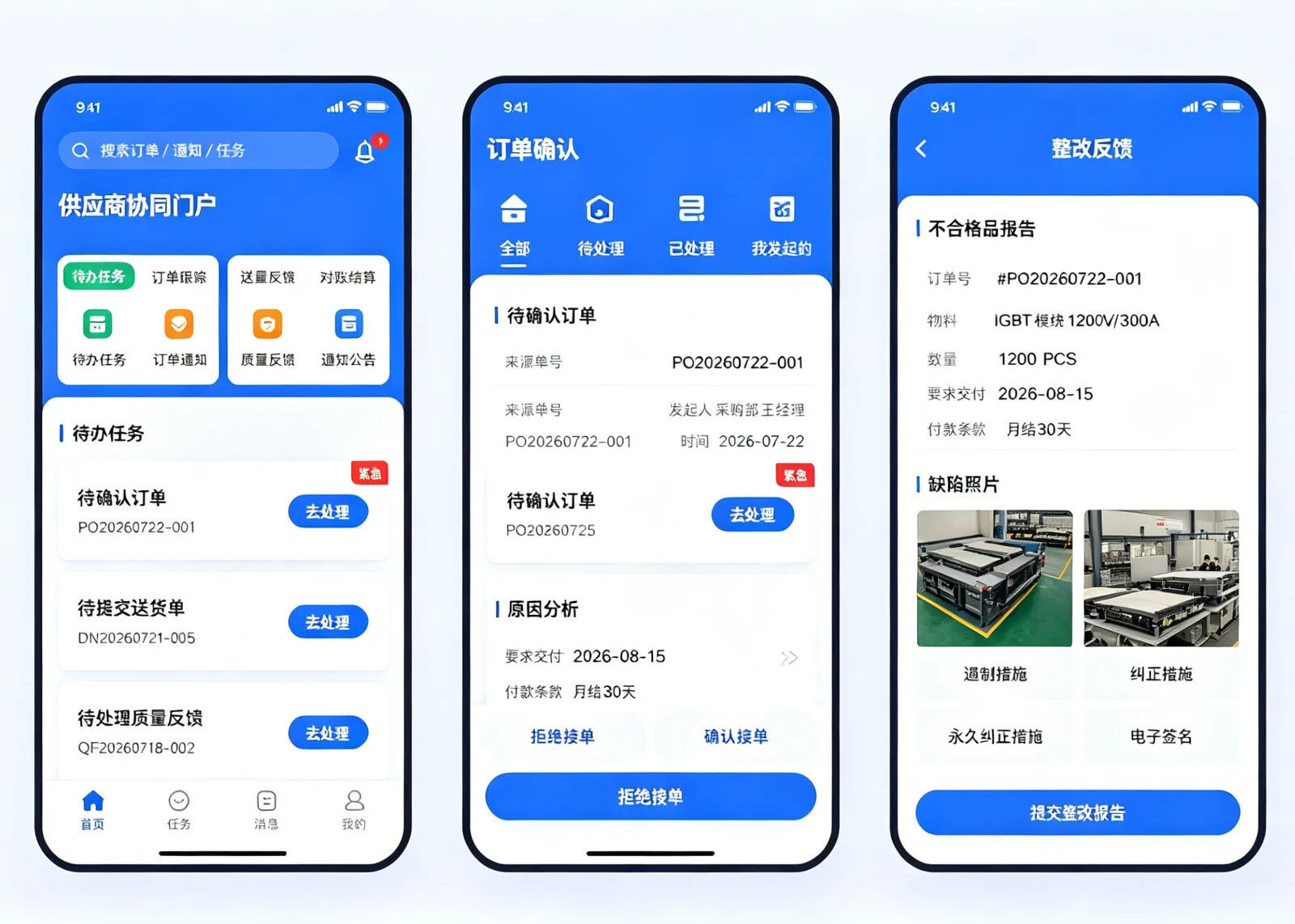
The system is easy to use and operate and can be adopted for collaboration without complex on-site training. The interface follows a task-driven approach, simplifying complex processes into progressive operation cards to minimize barriers for both sides and sustain willingness and efficiency in collaboration.
II. Core functional modules
1. Full life-cycle supplier management
Covers the full process from supplier registration, qualification review, record maintenance, grading and classification, and risk alerts through to elimination and exit. Supports qualification file upload and automatic expiry alerts; suppliers can be tagged by industry, category, and grade to build a unified enterprise supplier resource pool for standardized, visual centralized control.
2. End-to-end procurement collaboration
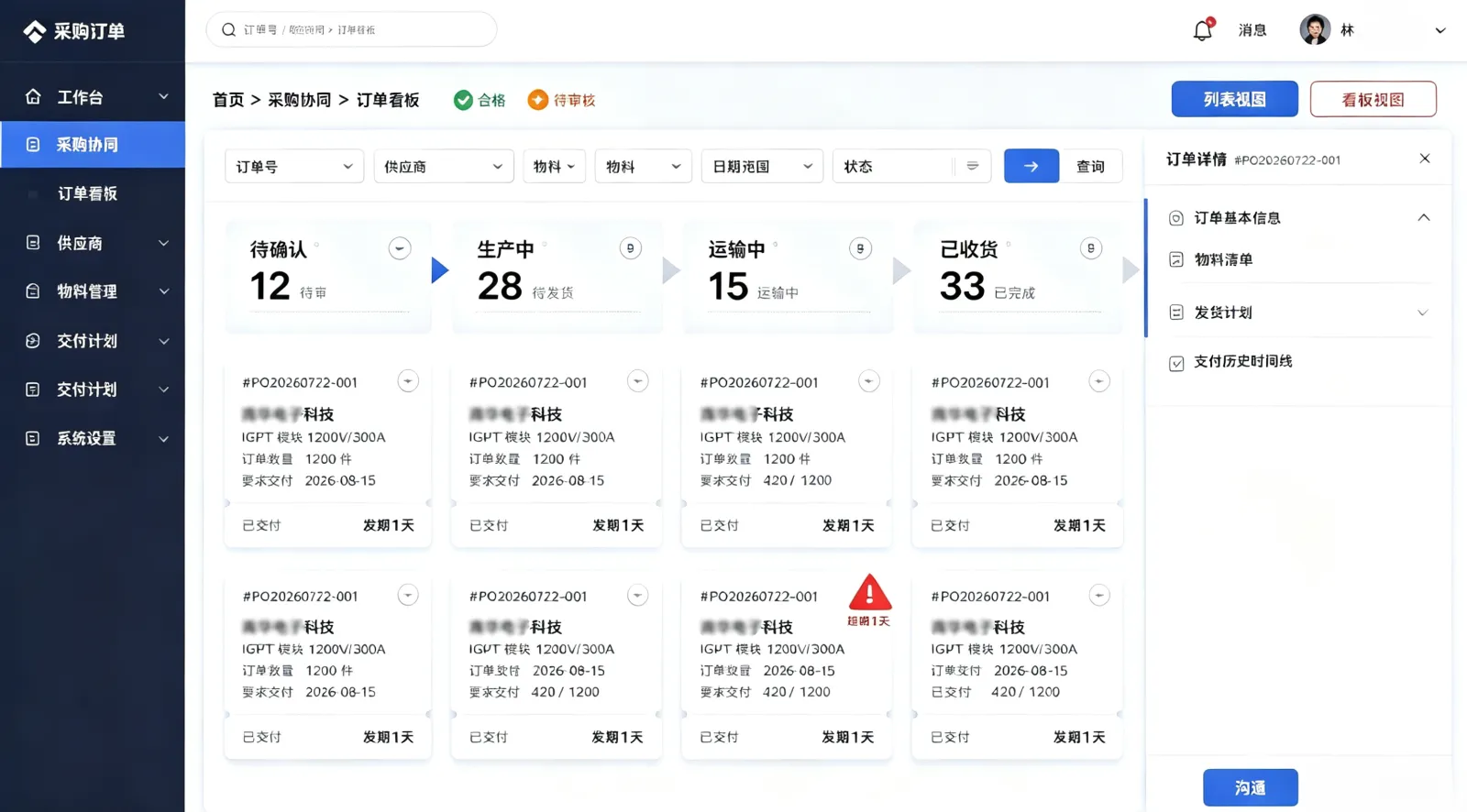
Digitizes the full chain from purchase requisition, inquiry and price comparison, order release, delivery schedule tracking, shipping notice, scan-based inbound receiving, three-way matching, and invoice settlement. Purchase orders push to the supplier portal with one click; suppliers confirm online and report delivery progress with automatic alerts on exceptions. Shipping information links with inbound processes; reconciliation data auto-matches and validates, greatly reducing offline communication and improving procurement execution efficiency.
3. Closed-loop incoming quality control
Deeply connects with enterprise inspection processes and test and control systems. Supports synchronizing inspection standards to suppliers, online entry of inspection results, closed-loop handling of nonconforming items, and quality exception tracking and correction. Test data can sync directly into the system and link to the corresponding supplier and batch, making procurement quality traceable, analyzable, and alertable across the chain and driving continuous supplier quality improvement.
4. Quantitative supplier performance evaluation
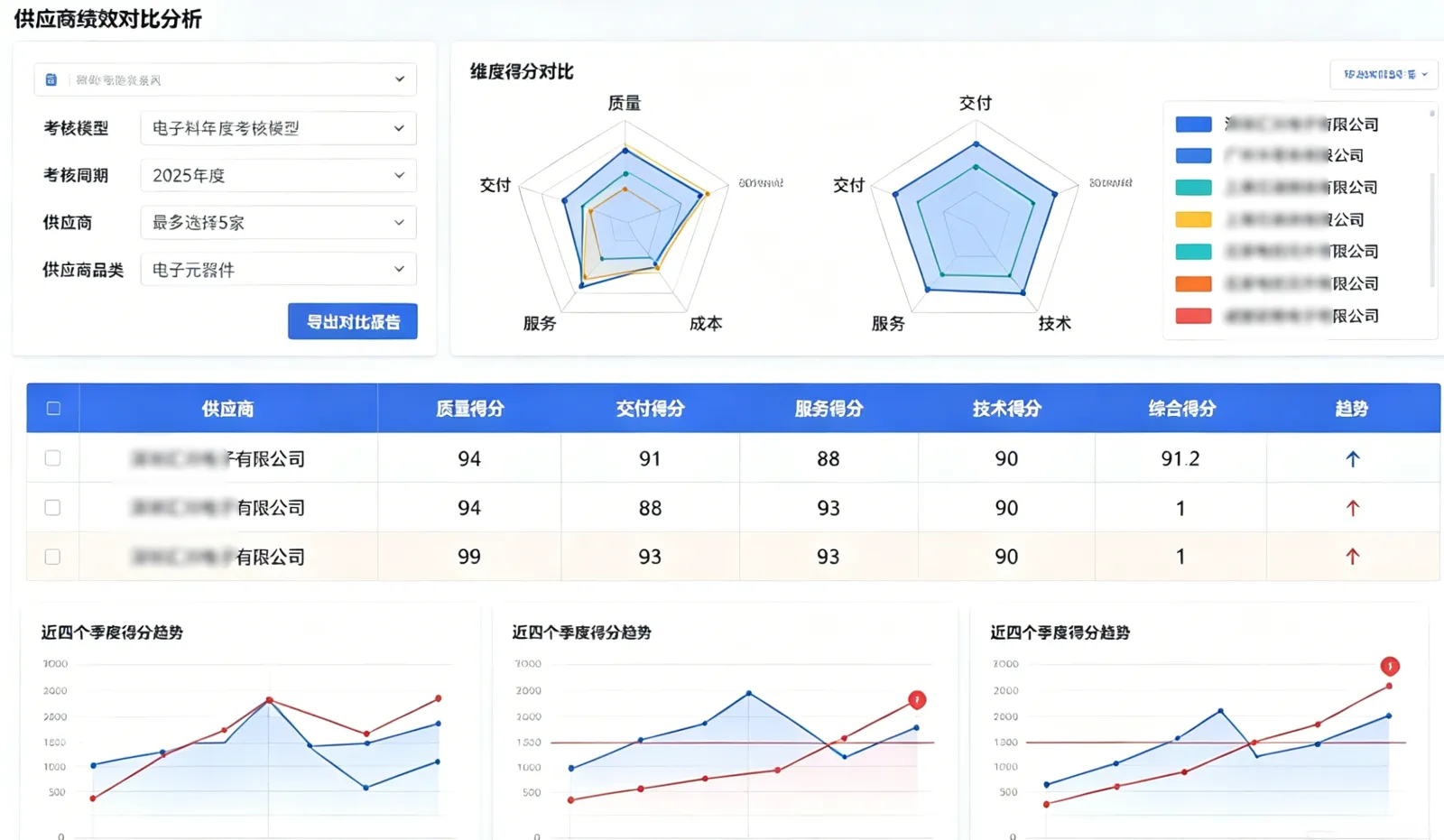
Supports custom performance assessment models with quantitative indicators and weights around quality, delivery timeliness, cost control, service response, and other core dimensions. The system automatically captures business process data to generate scores and rankings, supporting tiered supplier management and survival of the fittest, and providing data for optimized supply chain resource allocation.
5. Data visualization dashboards
Provides multidimensional reports and dashboards for procurement progress, quality trends, supplier performance rankings, delivery timeliness statistics, cost structure analysis, and more. Supports multi-condition filtering, data queries, and one-click export to present supply chain operating status and support management decisions.
6. Basic configuration and system administration
Supports flexible configuration of organization structure and user permissions, custom orchestration of business processes, unified maintenance of master data dictionaries (payment terms, packaging specifications, etc.), and management of message notification templates. Administrators can complete routine operational adjustments entirely through the front end so the system fits the organization's character and rules rather than forcing management to adapt to the system.
III. Technical advantages
1. Deep integration with business scenarios
Unlike generic SRM products, the system deeply integrates enterprise test and inspection scenarios, directly connecting with test host software and the test data platform to link "R&D testing—production quality inspection—supply chain management" and close the quality data loop from design to supply.
2. Highly flexible configuration
Supports visual configuration of assessment models, approval workflows, data fields, and report styles without code changes when management rules adjust, lowering secondary development cost and shortening business rollout cycles.
3. Full-stack localization and compliance
Supports a domestic environment from underlying hardware through applications, meeting information security and localization requirements in key industries such as defense and automotive and keeping core supply chain data secure and autonomous.
4. High availability and elastic scaling
Supports distributed deployment and elastic expansion for large-scale supply chain scenarios across multiple organizations, plants, and categories; the microservices architecture allows independent module upgrades and sustained long-term iteration.
5. Low threshold and easy operation
The portal is simple and lightweight and fits non-specialist usage habits. Task-driven to-dos, automatic message reminders, and instant mobile collaboration greatly lower collaboration barriers so upstream and downstream partners truly work closely on one platform rather than only reporting data.
IV. Application scenarios and results
1. Automotive electronics
For multi-supplier, multi-batch, high-quality automotive electronic components, the system binds supplier qualifications to quality system requirements, links incoming inspection data with production-line test data, and quickly traces quality exceptions to suppliers and batches. Procurement collaboration efficiency rose 40%, closed-loop handling time for incoming quality issues fell 50%, and supplier performance evaluation efficiency rose 60%.
2. New-energy equipment
For procurement with many categories and high customization in hydrogen production and energy storage equipment, the system supports project purchase plan breakdown and order management, links delivery progress with project schedules, and benchmarks procurement cost against project budgets in real time. Suppliers report delivery by project milestones to keep equipment integration on schedule. On-time project procurement delivery rose 35%, reconciliation workload fell 70%, and supply chain response speed improved markedly.
3. Military supporting industry
Meets strict requirements for supplier confidentiality qualifications, full-chain quality traceability, and compliant process records in defense. From transmission of technical requirements and return of prototype test data to military inspection records for item delivery, tamper-proof audit logs are formed. Quality issues support forward and reverse full-chain traceability; any operation can be reconstructed for accountability.