



Automotive structural fatigue life refers to the time or mileage during which various automotive components and structures can operate safely and reliably under continuouscyclic loads、vibration、temperature variation and other external factors. Fatigue life is one of the most important considerations in automotive design and manufacturing and relates to vehiclereliability、safety and maintenance cost.
1. Concept of fatigue failure
Automotive structural fatigue failure means that during vehicle use, due to long-term cyclic loads, vibration, or other external factors, structural parts or components developcracks、deformation、fracture or other forms ofdamage, which may ultimately lead to accidents or failures. This type of failure is usually progressive because it develops gradually under many load cycles rather than from a single large force or stress.
2. Stress–life method
The stress–life method evaluates the fatigue life of materials and structures under cyclic loading. The automotive structural stress–life method assesses fatigue life of automotive structures under continuous cyclic loads, vibration, and various external factors. Different stress levels are applied to the structure and load cycle counts and fatigue failure counts are recorded to plot the stress–life curve (S-N curve), which shows the relationship between stress level and life and helps engineers predict fatigue performance in actual use.
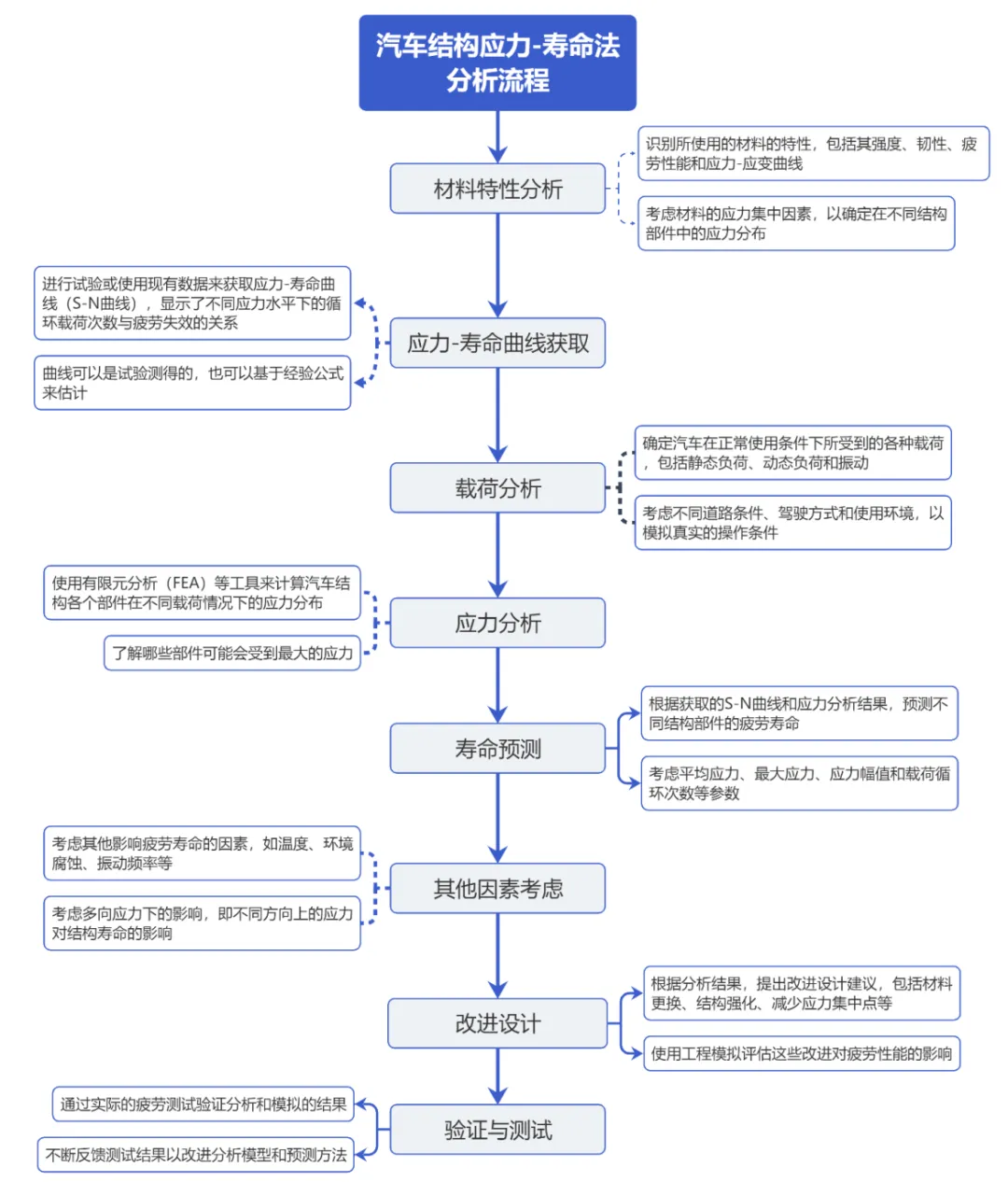
Automotive structural stress–life analysis is a key step to ensure structural safety and reliability and can help manufacturersreduce accident risk、improve vehicle durability, whilereducing maintenance cost.
3. Strain–life method
The automotive structural strain–life method is an engineering analysis approach to evaluate performance and life of structural parts under fatigue loading. The strain–life method is widely used in automotive, aerospace, construction, and other fields to assess fatigue performance of materials and structures and ensure safe, reliable long-term operation. This analysis requires strong engineering knowledge and test data to ensure performance meets design and safety requirements.
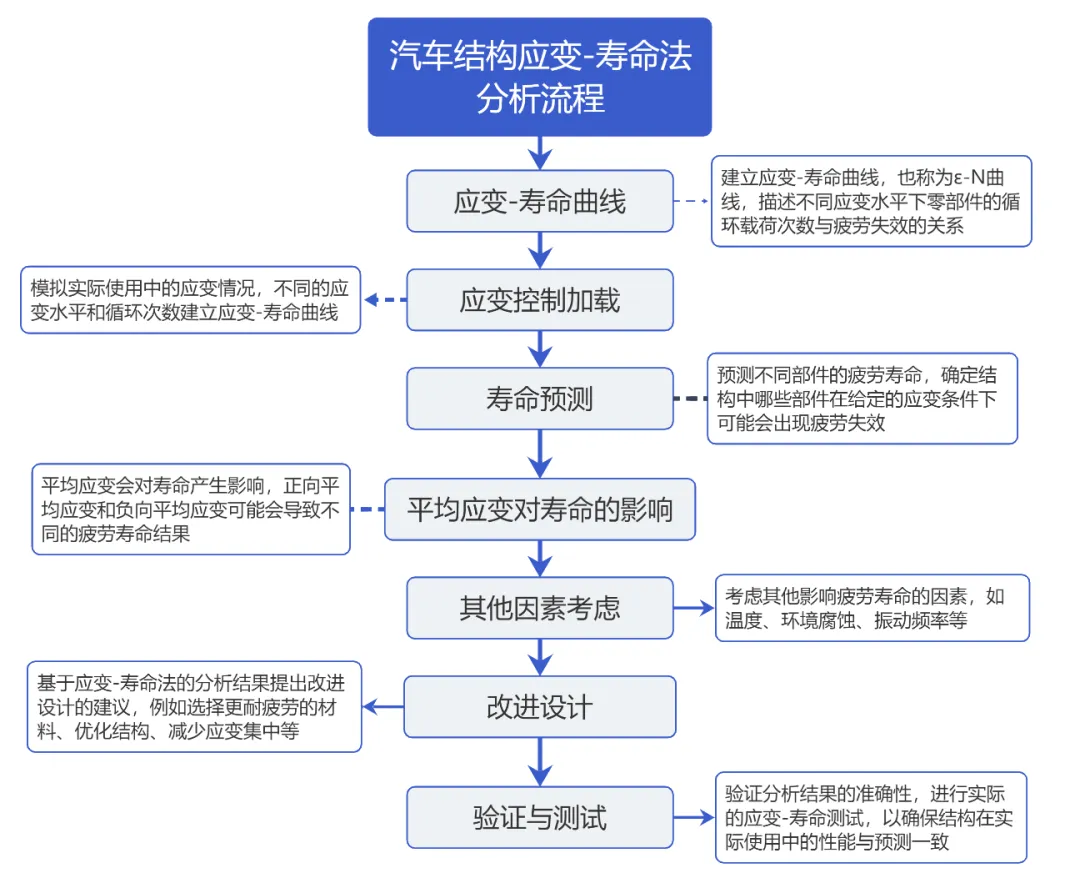
Automotive structural strain–life analysis is an important engineering task to ensure parts have sufficient durability under fatigue loading. It requires professional engineering knowledge and precise test and measurement techniques to ensure structures remain safe and reliable over long-term use.
4. Strain fatigue life calculation method for combined events
The strain fatigue life calculation method for combined events is used in engineering to estimate fatigue life of materials or structures under multiple different strain conditions. The following is a detailed discussion of this method:
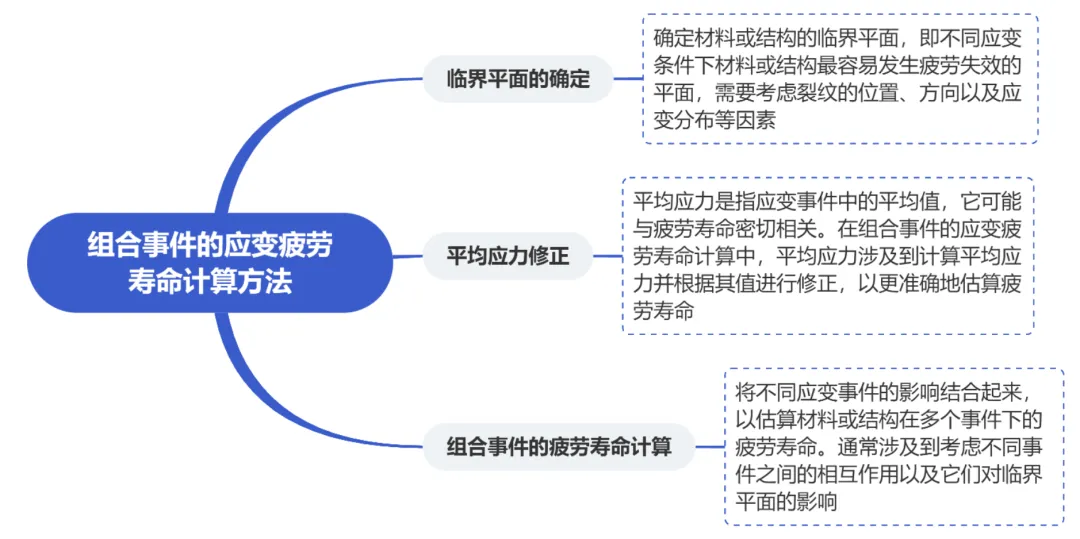
The combined-event strain fatigue life method is vital for evaluating performance of materials or structures in complex engineering applications. By clearly defining critical planes, correcting mean stress, and considering interactions between different events, fatigue life in actual use can be predicted more accurately to ensure reliability and safety. This method usually requires complex mathematical models and computational tools.
5. Theory of frequency-domain vibration fatigue life
Frequency-domain vibration fatigue life theory evaluates structural fatigue life under vibration and cyclic loading. It uses frequency-domain analysis to understand and predict fatigue failure by transforming structural vibration response from the time domain to the frequency domain to understand stress response at different vibration frequencies. The theory includes time-to-frequency transformation, stress power spectral density, and frequency-domain fatigue life calculation by combining stress PSD with material fatigue curves. This helps predict fatigue life under vibration loading.
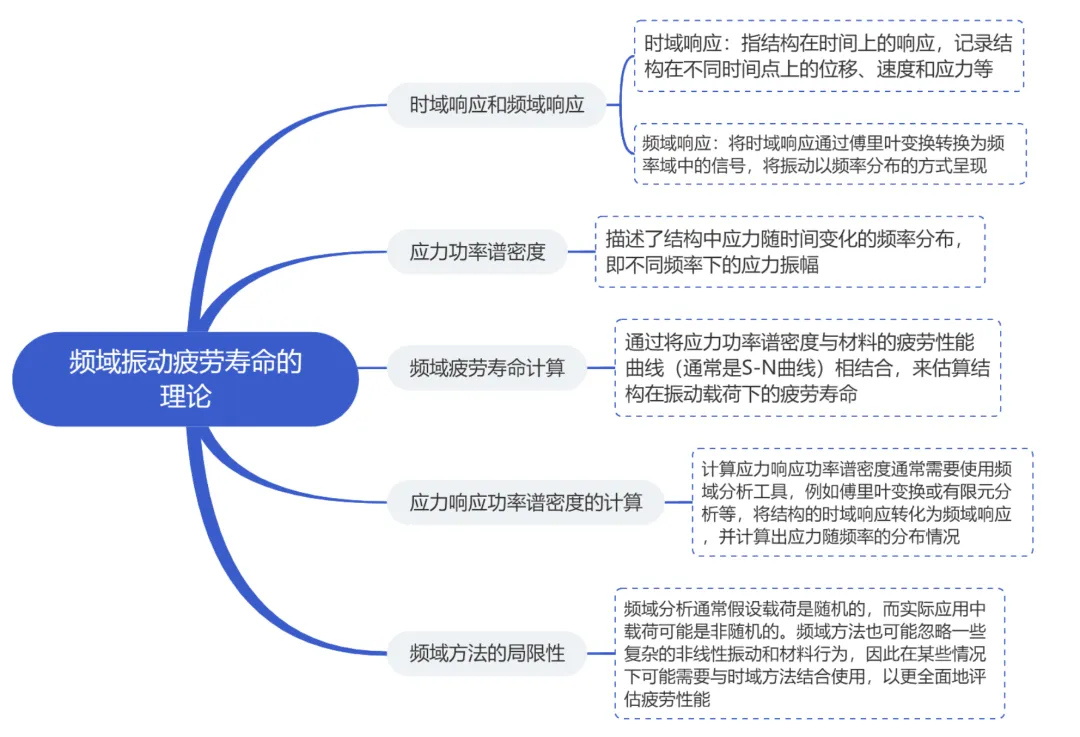
Frequency-domain vibration fatigue life theory is an important engineering method for predicting fatigue failure under vibration loading. By analyzing stress power spectral density and frequency-domain characteristics of stress response, structural life can be better assessed for safe, reliable real-world application. However, method limitations must be considered carefully and the appropriate analysis method chosen for each case.
In summary, studying fatigue life of automotive structural parts is important for improving safety, durability, quality, and environmental performance of vehicles. It helps build safer, more reliable, higher-performance cars, improves passenger safety and comfort, reduces resource waste, and lowers maintenance cost. It also promotes improvements in materials and design, extends vehicle life, reduces repair cost, improves environmental performance, and reduces resource waste. Therefore, studying fatigue life of automotive structural parts is indispensable in the automotive industry and brings important benefits to manufacturers and consumers.