



Introduction to Life and Damage Calculation
Life and damage calculation predicts fatigue life and the level of damage for a structure under cyclic loading, based on material mechanical properties and structural stress–strain state. It is an important engineering discipline that improves structural safety and reliability and reduces failures and accidents.
Several life and damage calculation approaches are available today. You can choose and apply them according to the engineering problem and conditions. Common methods include the following:
• Nominal stress method: Fatigue life is estimated from nominal structural stress and the material S–N curve. It suits high-cycle fatigue and structures without notches. Load sequence and residual stress are considered, but local plastic deformation and stress gradients at notches are not. The method is simple: nominal stress and an S–N curve are enough for estimation. It does not account for stress concentration or stress gradients at notches, or nonlinear stress–strain behavior and multiaxial loading. It is suited to high-cycle fatigue and notch-free structures; for low-cycle fatigue or notched structures, life may be over- or underestimated.
• Local stress–strain method: Fatigue life is estimated from the local stress–strain history at a notch and the material cyclic stress–strain curve. It suits low-cycle fatigue and notched structures and can represent nonlinear stress–strain behavior at the notch, but it is very sensitive to the fatigue notch factor. A fatigue notch factor enables life estimation for notched structures. Determining that factor is difficult and requires extensive test data and empirical formulas. Multiaxial and non-proportional loading are not covered. It suits low-cycle fatigue and notched structures; for high-cycle fatigue or notch-free structures, life may be over- or underestimated.
• Energy method: Fatigue life is estimated from the local strain energy history in the structure and the material cyclic energy dissipation–life curve. Multiaxial and non-proportional loading can be considered, but energy per cycle is assumed to add linearly, which does not match reality. An energy density factor supports life estimation for arbitrary geometry. Because of damage accumulation, elastic recovery, and related effects, energy per cycle is not equal in practice, so life predictions can show error.
• Field intensity method: Fatigue life is estimated from the stress field intensity history in the failure region and the material S–Nf curve. Crack size, fracture toughness, and stress intensity factor can be included, but analysis is complex. Field intensity parameters support life estimation for cracked or defective structures. Stress field intensity histories require detailed analysis such as finite element or boundary element methods, and material S–Nf curves need substantial test data and parameters. This approach suits structures with high crack sensitivity and severe failure consequences.
• Fracture mechanics method: When defects or cracks exist, fatigue life is estimated from deformation-based fracture mechanics—crack growth, instability, and arrest. Crack growth rate and time can be predicted, and manufacturing quality and safety factors can be assessed, but extensive test data and parameters are required. Parameters such as crack growth threshold, growth-rate laws, and arrest criteria support life estimation for cracked or defective structures. It does not fully address remaining fatigue life, which depends on crack size as well as position, orientation, and shape. It suits structures with high crack sensitivity and severe failure consequences.
• Reliability-based design method: Reliability theory and statistical design data are used to optimize the structure against specified reliability targets. Risks and weak points can be identified; prevention and design changes improve inherent reliability, but remaining fatigue life assessment is not addressed by this method alone. Its strength is identifying risks and weak areas and improving inherent reliability through prevention and design improvement.
Analysis Software
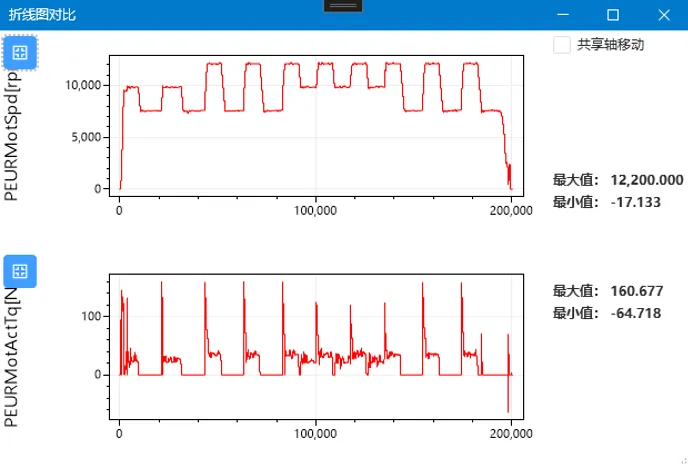
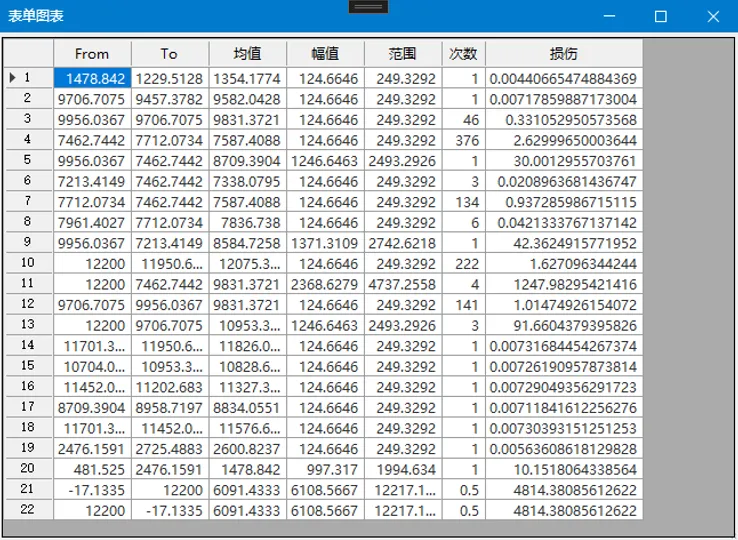
Application Examples
• Aircraft wing fatigue analysis: Wings carry complex loads and environmental effects and need fatigue analysis for safety and reliability. Finite element analysis and fracture mechanics are commonly used to model and simulate wing structures. From flight load spectra and material properties, stress–strain state, crack growth rate, and life are predicted. Fatigue analysis can optimize design parameters such as thickness, shape, and material to improve fatigue resistance.
• Automotive wheel fatigue analysis: Wheels carry complex loads and environmental effects and need fatigue analysis for safety and reliability. The local stress–strain method or energy method is commonly used to model and simulate wheel structures. From driving load spectra and material properties, stress–strain state, damage level, and life are predicted. Fatigue analysis can optimize design parameters such as size, shape, and material to improve fatigue resistance.
• Bridge cable strand fatigue analysis: Cable strands carry complex loads and environmental effects and need fatigue analysis for safety and reliability. The field intensity method or fracture mechanics method is commonly used to model and simulate strand structures. From traffic load spectra and material properties, stress field intensity, crack growth rate, and life are predicted. Fatigue analysis can optimize design parameters such as diameter, shape, and material to improve fatigue resistance.